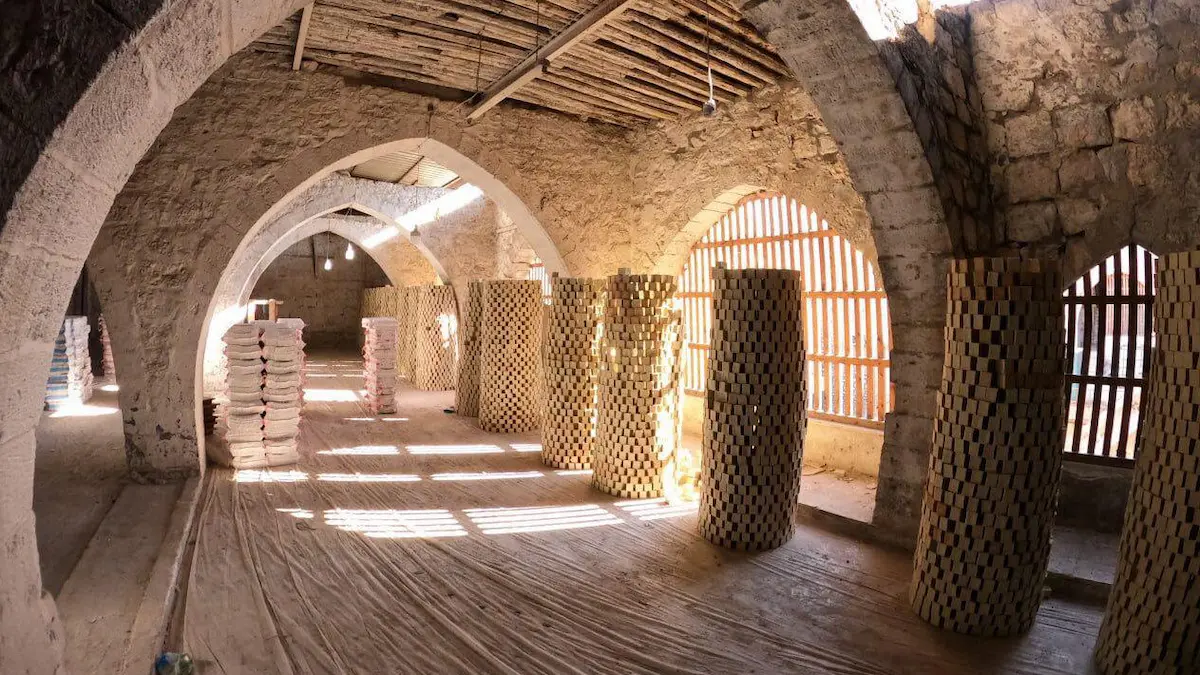
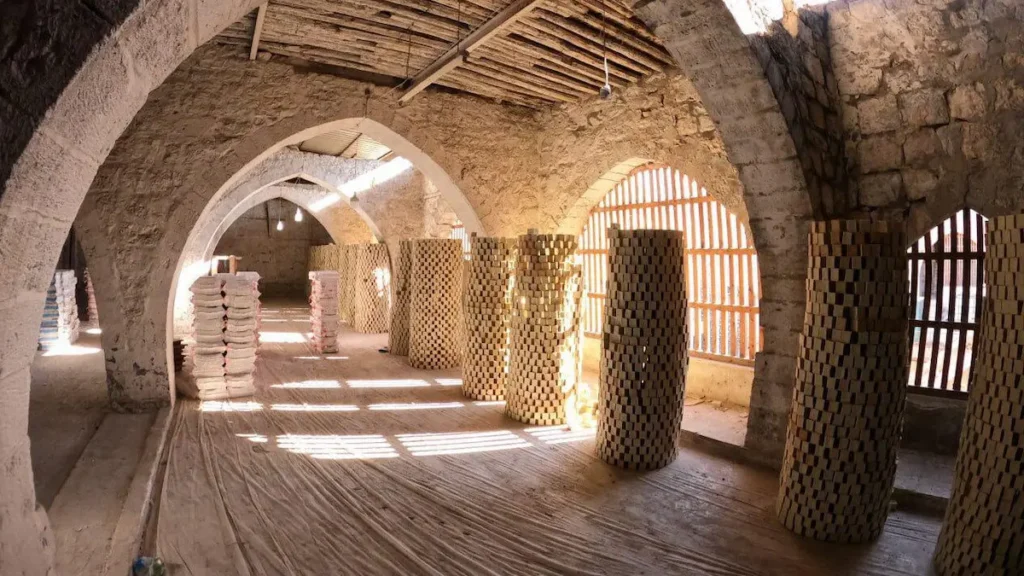
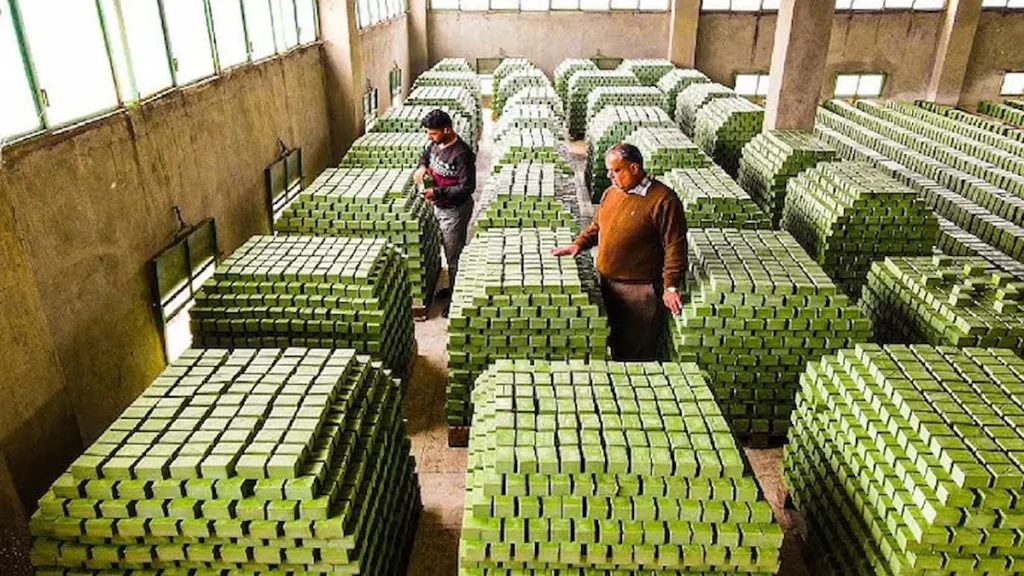
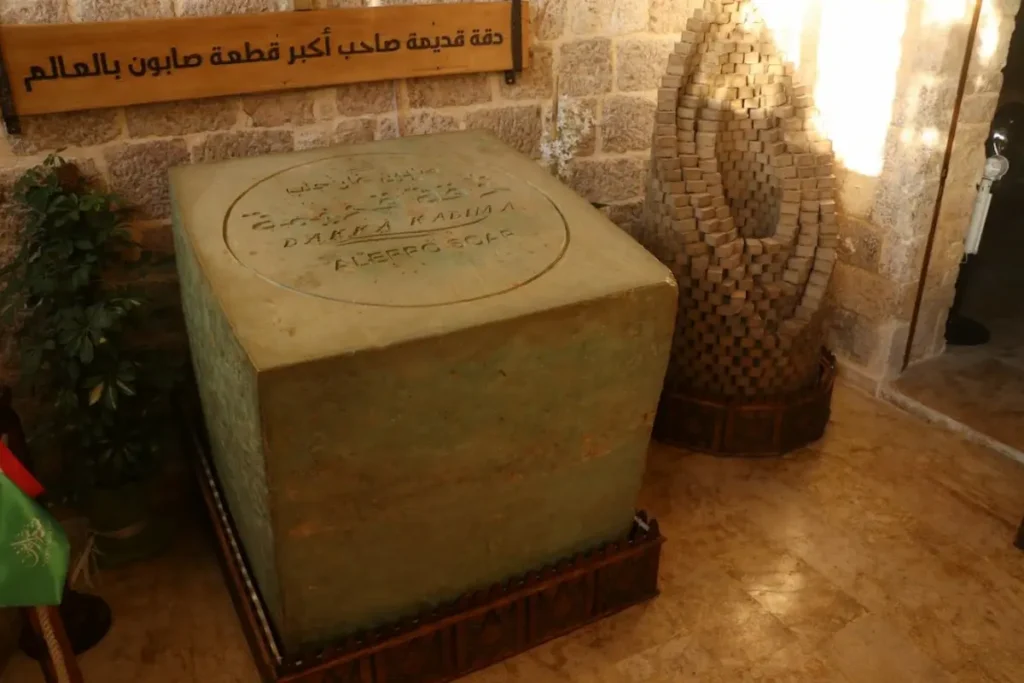
Stepping into a traditional Aleppine soap workshop is like walking into a different era. The air is thick with a distinct, earthy aroma—a comforting blend of rich olive oil and pungent laurel. Towering stacks of soap blocks reach toward the high stone ceilings of the khan (caravanserai), aging silently like fine wine.
This isn’t just soap; it is Aleppo Laurel Soap (known locally as Ghar soap), a 4,000-year-old tradition that embodies the soul of a city that has withstood the test of time. At Syria Caravans, we believe that true travel means connecting with the living history of a place, and few things tell the story of Syria quite like this legendary craft.
The 4,000-Year History of Ghar Soap
Long before modern skincare aisles existed, the artisans of Aleppo were perfecting what is widely considered the world’s first hard bar soap.
For millennia, Aleppo served as a vital, bustling hub on the Silk Road. Its legendary soap was one of its most precious exports, carrying the unique scent of Syria to bathhouses across Europe and Asia. Legend even has it that historical icons known for their beauty regimens, such as Cleopatra and Queen Zenobia of Palmyra, relied on this “green gold” to nourish their skin. It is a product born from the fertile lands of the Levant, utilizing the abundant olive groves and laurel bushes of the region.
Crafting the “Soap Forests”
True Aleppo soap cannot be mass-produced in a factory overnight. It is a seasonal craft, dictated by nature and the rhythm of the harvest. The manufacturing process has remained virtually unchanged for centuries, taking place only during the cooler winter months following the olive harvest.
The method is a fascinating spectacle of traditional labor:
- The Boil: Olive oil, water, and lye are boiled in massive underground vats or large copper cauldrons for up to three days. The master soap maker constantly monitors the mixture.
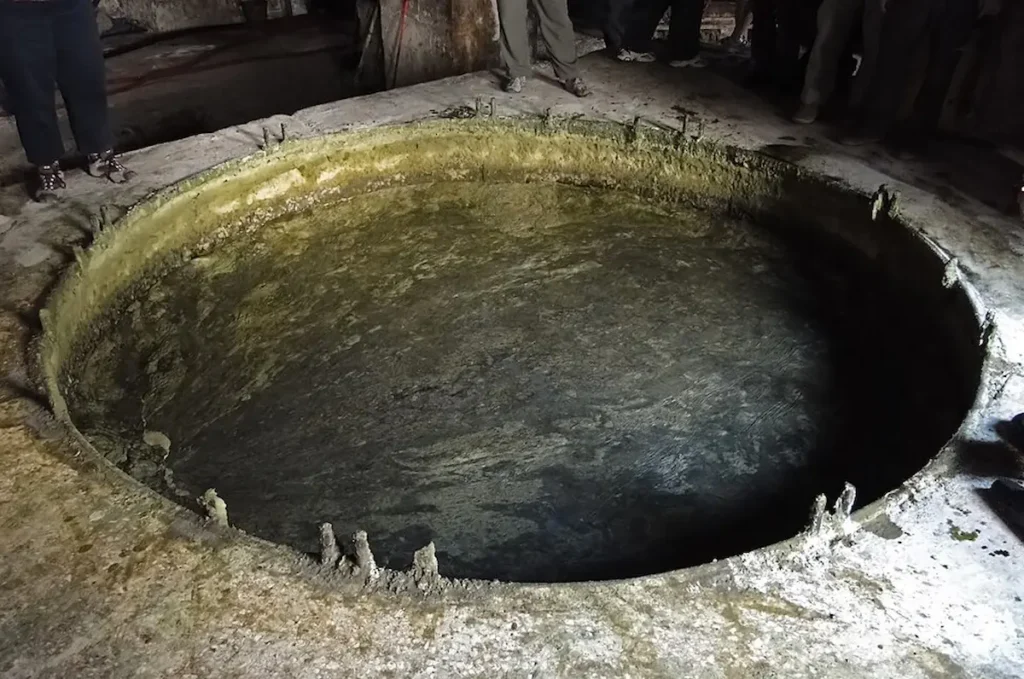
- The Laurel Infusion: Near the end of the process, precious laurel berry oil is added. This is the defining ingredient that gives the soap its distinctive scent and medicinal properties.
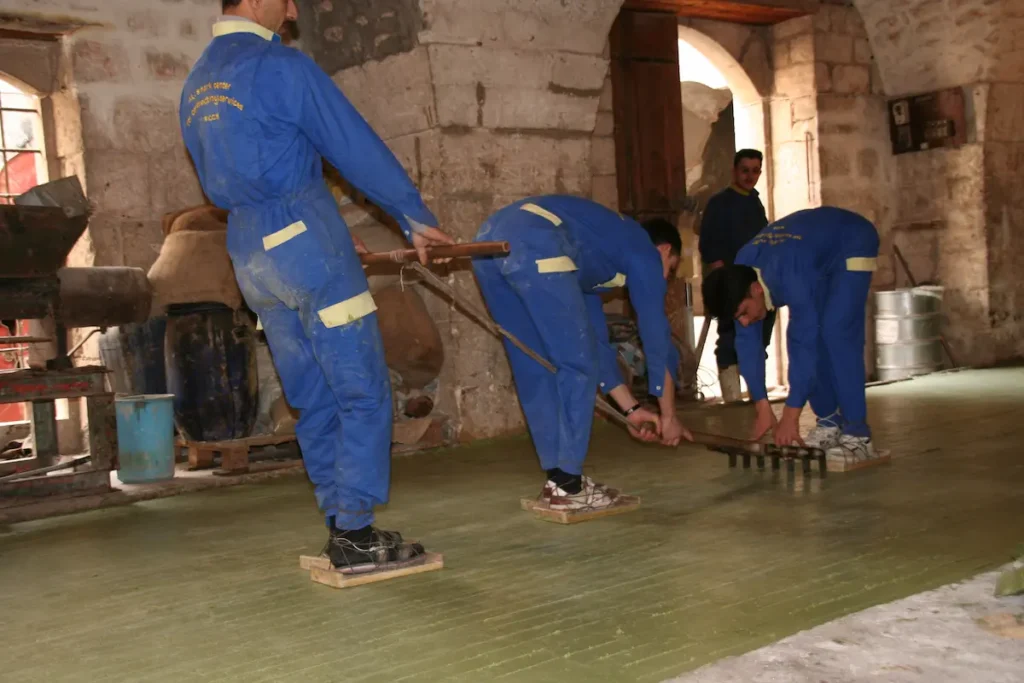
- The Pour and Cut: The thick, vibrant emerald-green paste is poured onto expansive floor spaces to cool and solidify. Artisans with blades strapped to their feet skate across the surface to level it, before it is hand-cut into rough cubes.
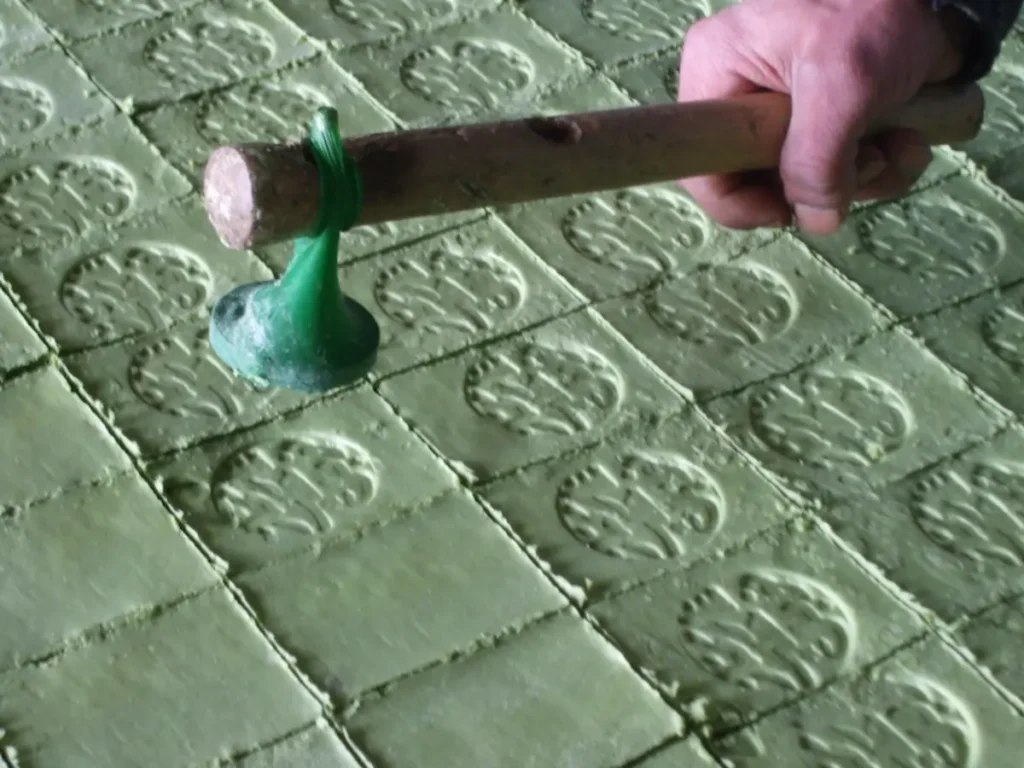
- The Stamping: Each block is individually hand-stamped with the artisan’s traditional seal—a mark of pride and authenticity.
However, the soap is not yet ready. The final, most crucial step is aging. The blocks are stacked in geometric towers, arranged with small gaps to allow airflow. They sit for six to nine months, creating “soap forests” inside the workshops. During this time, the exterior oxidizes into a golden-brown crust, while the inside remains a vivid green.
Nature’s Remedy: The Benefits of Laurel Oil
In a modern world saturated with synthetic ingredients, Aleppo soap remains remarkably simple. It is cherished not just for its history, but for its incredible natural properties. It contains no artificial perfumes, colorings, or animal fats, making it biodegradable and deeply nourishing.
The magic lies in the balance of its two main oils:
- Olive Oil: Provides deep moisturization and is gentle enough for babies or sensitive skin.
- Laurel Oil: Known for its natural antiseptic, antifungal, and antipruritic (anti-itch) properties. It is often used to soothe skin conditions like eczema, psoriasis, and acne.
Tip: When buying Aleppo soap, you will often see percentages (e.g., 20%, 40%). This refers to the amount of laurel oil. A higher percentage means a stronger scent and more potent medicinal properties.
Experience the Legacy with Syria Caravans
Reading about this ancient craft is one thing; standing amidst the fragrant soap towers in an ancient stone workshop in Aleppo is quite another.
At Syria Caravans, our mission is to weave together the narratives of Syria’s past and present by revealing these hidden treasures. We believe in connecting you directly with the artisans who are keeping Syria’s rich heritage alive against all odds.
When you hold a bar of authentic Aleppo soap, you are holding a piece of history—a testament to Syrian resilience, artistry, and hospitality.
Are you ready to explore the rich tapestry of Syria for yourself? Choose your Trip now to begin planning your journey into history.