If the history of Damascus could be woven into a single fabric, it would be Brocade. Known locally as Brokar, this luxurious textile has been the crown jewel of Syrian craftsmanship for over a thousand years, turning natural silk, gold, and silver into a living masterpiece.
The Royal Choice
For centuries, Damascene Brocade was the ultimate symbol of status. It wasn’t just for local nobility; its fame traveled the Silk Road to the palaces of Europe.
- Queen Marie Antoinette reportedly had 72 dresses made of it.
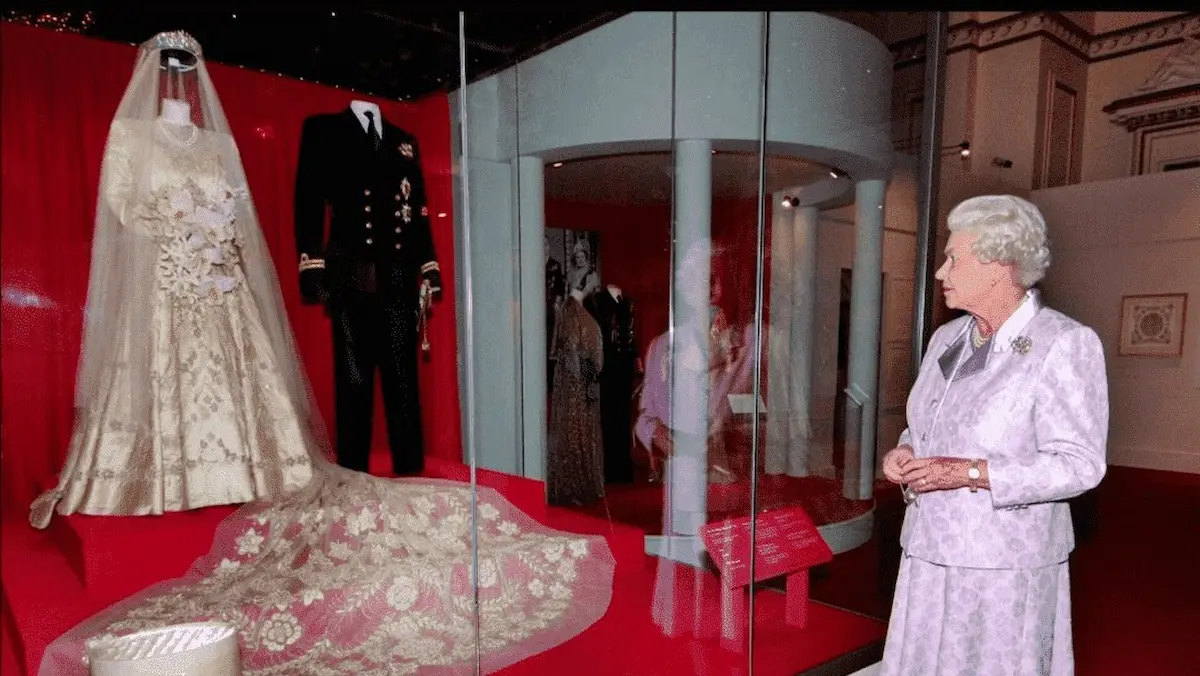
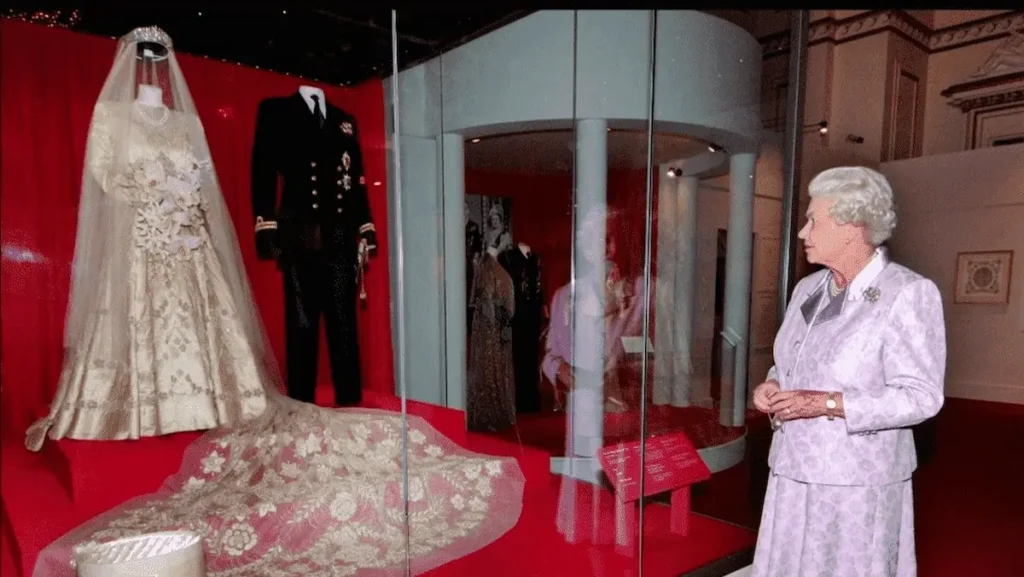
- Queen Elizabeth II famously wore a wedding gown made of Syrian Brocade in 1947—a gift from the Syrian government featuring the “Birds of Paradise” pattern, woven with 10-karat gold threads.
The Art of the Loom
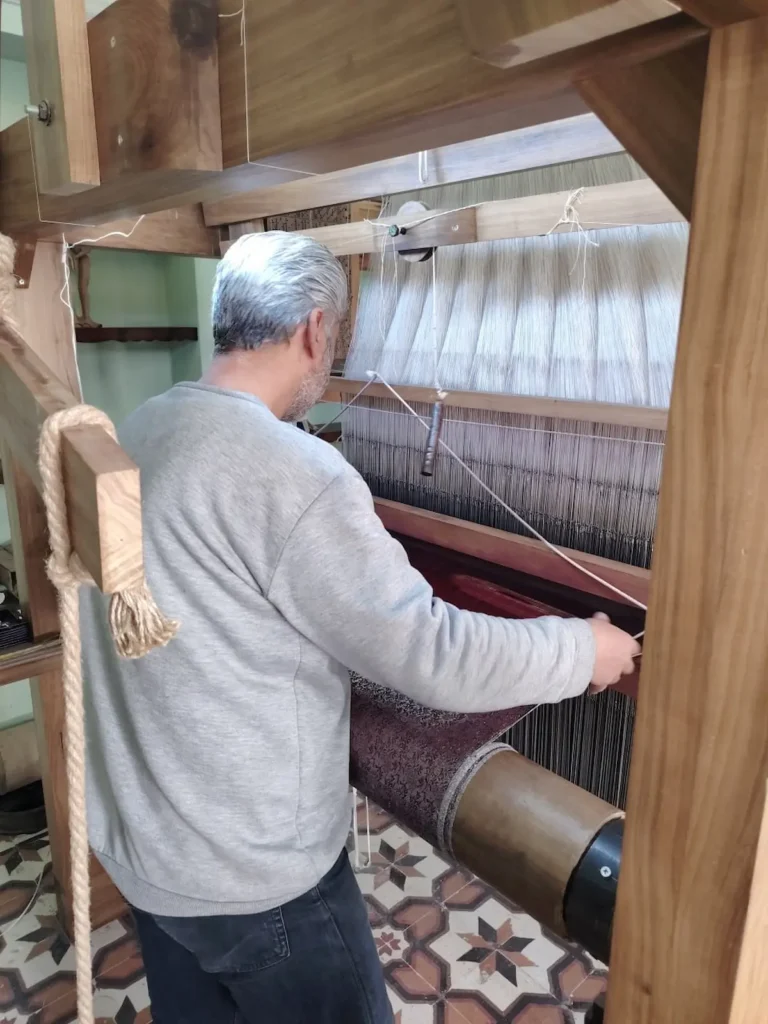
True brocade is a labor of incredible patience. Artisans work on traditional wooden looms, sometimes spending an entire day to produce just 10 centimeters of fabric. Each pattern is meticulously “programmed” into the loom using a Jacquard system—a series of punched cards that guide thousands of individual silk threads to form intricate designs.
Patterns of the Levant
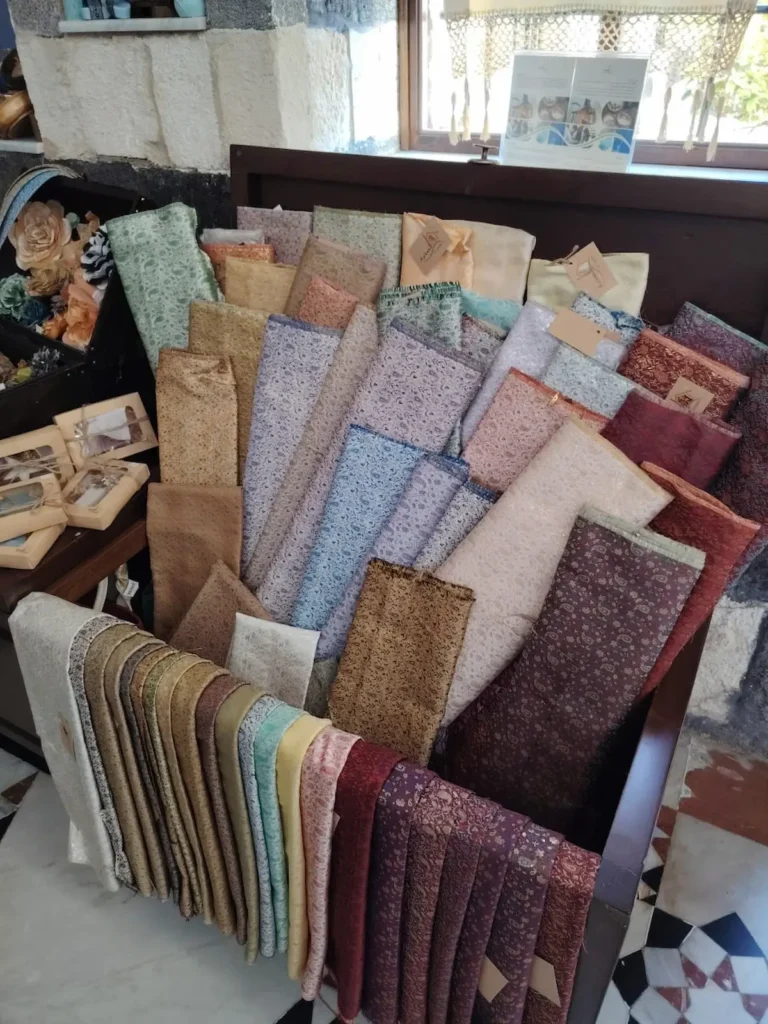
The motifs found in Syrian Brocade are a reflection of the land itself. When you look closely at a piece, you might see:
- The Damascene Jasmine: The fragrant soul of the city’s courtyards.
- Birds of Paradise: Symbolic of love and peace (featured on Queen Elizabeth’s dress).
- The “Romeo & Juliet” Pattern: A testament to the cultural exchange between East and West.
- Cashmere and Grape Leaves: Traditional symbols of abundance and heritage.
A Living Legacy
Today, this craft is more than just a luxury; it is a symbol of Syrian resilience. In workshops like those in the Old City, master weavers are still passing down the secrets of the loom to a new generation, ensuring that the “Queen of Textiles” never fades.