Menu

The Ultimate Syrian Heritage Loop: Seven Days, Seven Millennia

7 Days

Welcome to a truly transformative journey. Our 7-Day Ultimate Syrian Heritage Loop is a meticulously crafted program designed to immerse you in the staggering history, profound religious heritage, and resilient culture of Syria. This is an invitation to look beyond the headlines and walk the streets of cities that have been continuously inhabited for millennia, witnessing monuments that testify to the rise and fall of countless empires.

From the vibrant, jasmine-scented alleys of Old Damascus to the legendary desert ruins of Palmyra, and the mighty Crusader fortress of Krak des Chevaliers, this itinerary covers the absolute essence of this ancient land. We balance world-famous historical sites with deep cultural encounters, ensuring you taste the distinct cuisine, meet the local people, and hear the whispers of history firsthand.

Day-by-Day Story: Where History Lives

The Magic of Damascus: Oldest City, New Encounters (Days 1-3)

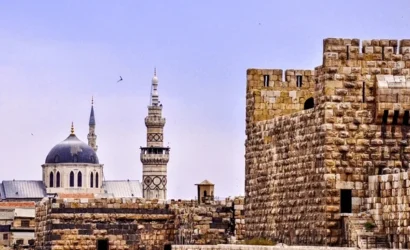
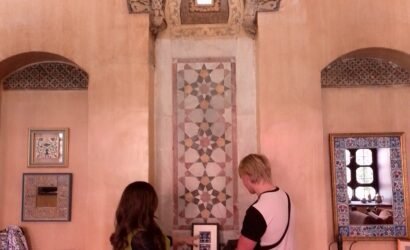
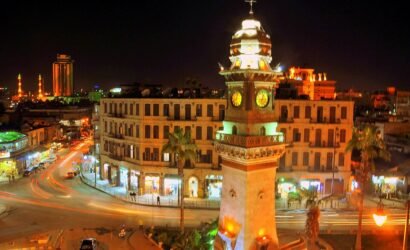
Your journey begins in Damascus, the oldest continuously inhabited capital in the world. Day 1 is a sensory awakening: inhale the rich aromas of spices and seasonings in the old markets, and settle in with a strong cardamom coffee at the historic Al-Nawfara café. We spend Day 3 fully immersed within the Old City walls, exploring the grandeur of the Umayyad Mosque, the historical significance of Straight Street, and the stunning architecture of Azm Palace. This time is dedicated to the heart of the capital, even including an authentic experience on public transportation and a taste of the Damascene nightlife.

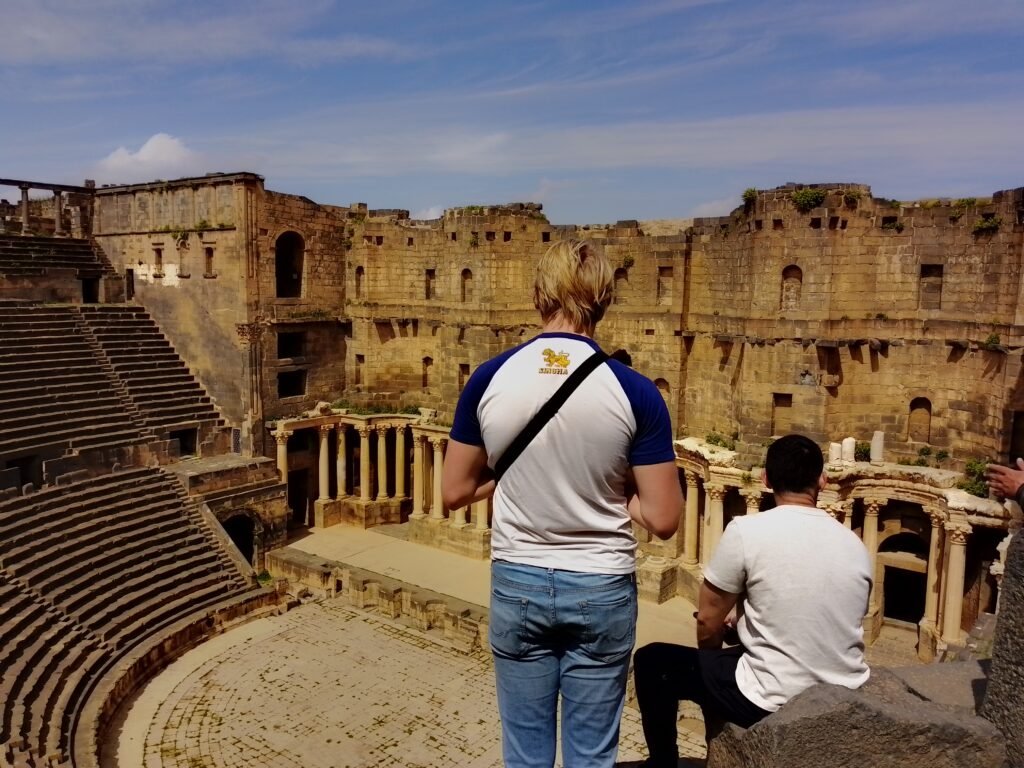
The second day is a deep dive into the south, leading us to Bosra. Here, you will stand in awe of the Bosra Roman Theater, an architectural masterpiece considered the largest and most complete Roman amphitheater in the world. After exploring the ancient Nabataean and Roman ruins, we enjoy traditional home-cooked food—a true taste of Syrian hospitality—before returning to Damascus.


The Aramaic Trail and The Valley of the Cross (Day 4)

Day 4 is a spiritual and historical pilgrimage. We travel to the mountain village of Maaloula, a global treasure, renowned as one of the last places where Aramaic, the language of Christ, is still spoken. Here, we walk the Holy Road and visit the famous Monastery of Saint Thecla. Our journey continues to Saidnaya to see the Monastery of the Virgin Mary, which holds a unique icon painted by Saint Luke. The day concludes by moving north to Homs, visiting the Church of the Belt of the Virgin Mary and the Khalid Ibn al-Walid Mosque, before resting in the historic city of Aleppo.

The Grandeur of the North: Aleppo, Hama, and Krak (Day 5 & 6)

Our time in Aleppo (Day 5) is a tribute to its resilience and history. We dedicate a full day to its magnificence, exploring its famed Citadel, wandering the historic covered markets, and admiring the splendor of its gates and traditional soap factories like Khan al-Saboun. The evening is reserved for savoring the legendary and distinctive Aleppo cuisine.

Day 6 takes us through the lush Orontes River valley. In Hama, we pause to photograph the iconic waterwheels (Norias) and explore the magnificent Azm Palace. The highlight of the day is the breathtaking Krak des Chevaliers, considered one of the most beautiful and well-preserved medieval castles in the world—a monumental testament to Crusader architecture. We spend the night in the beautiful surrounding valley.

The Desert's Bride and Farewell (Day 6 & 7)

Before our departure, we dedicate Day 6 (late) and Day 7 (morning) to the crown jewel of the Syrian desert: Palmyra, the legendary “Bride of the Desert.” Witness the remnants of the majestic past, including the Temple of Bel, the Arch of Triumph, and the Column Avenue. We embrace the desert experience, enjoying authentic Bedouin food and a stay in a traditional tent. This powerful final stop provides a reflection on the scale of human history before your guided transfer to the airport or border on Day 7.

FAQs

Regarding Palmyra (Day 6): Given the site's history, does visiting the Temple of Bel, Temple of Baalshamin, and Arch of Triumph mean seeing their ruins, or are any parts rebuilt and accessible?

You will be seeing the ruins of these magnificent structures. The Temple of Bel and Temple of Baalshamin were largely destroyed, and the Arch of Triumph was severely damaged. Your visit will focus on the vast scale of the former complex, walking the Column Avenue, and viewing the surviving monumental elements like the Tetrapylon and the amphitheater. The visit is a powerful experience of both ancient grandeur and recent loss, often accompanied by active reconstruction projects.

What is the current state of the famous souqs (covered markets) of Aleppo (Day 5), and how extensive is the walking tour through them given the known damage?

The Aleppo Souqs were tragically damaged. However, significant sections of the markets—particularly the more modern commercial areas and certain key historical khans (like Khan al-Saboun)—have been actively restored and reopened. Your tour will focus on these revived areas, showcasing the resilience of the local merchants and the ongoing work to bring the full market back to life.

On Day 2 in Bosra, is the vast Roman Theater fully accessible for visitors to walk through the stage and seating areas?

Yes. The Bosra Roman Theater is one of the best-preserved in the world, largely because it was fortified into an Ayyubid Citadel. It is almost fully intact and is completely accessible for walking through the stage (scaenae frons) area, climbing the seating tiers, and exploring the surrounding citadel fortress that preserved it.
Are the holy sites of Saidnaya, Maaloula, and the Church of the Belt of the Virgin Mary in Homs (Day 4) fully operational, or are any parts closed for renovation?

All sites are operational. While all three were damaged during the conflict, extensive restoration efforts by local and international bodies have returned them to use. The monasteries in Saidnaya and Maaloula are functioning with active communities, and the Church of the Holy Belt in Homs is restored and holding services, though minor ongoing conservation work may be visible.

What level of fitness is required for the visit to Krak des Chevaliers (Day 5), and how much time is spent climbing and exploring the interior?

A moderate level of fitness is recommended. The Krak des Chevaliers is a large hill-top castle requiring significant walking on uneven stone surfaces, climbing steep medieval stairs, and navigating through long corridors and ramparts. You will typically spend 2-3 hours exploring the entire citadel with your guide.

Will we definitely hear Aramaic spoken in Maaloula (Day 4), and are we able to interact with the local community there?

Yes, Western Neo-Aramaic is still spoken, primarily by the older generation, and your guide will highlight this linguistic treasure. While direct interaction depends on the community's daily schedule, you will encounter locals at the monasteries and perhaps in the village shops, offering a chance to witness this unique living history.

What should I expect during the "nightlife in Damascus" (Day 3) and the "distinctive Aleppo cuisine" dinner (Day 5)? Are non-alcoholic or vegetarian options easily available?

Damascus Nightlife usually involves visiting a traditional café (Qahwet al-Nawfara on Day 1 is already included) or a lively restaurant/bar in the Old City, featuring local music, argileh (shisha), and a social atmosphere. Aleppo Cuisine is famous for kebabs, kibbeh, meze, and sweet pastries (halawiyat). Non-alcoholic drinks are standard (fresh juices, soft drinks). Vegetarian options are common and easily arranged, as Syrian cuisine features many pulse and vegetable-based meze (e.g., hummus, muttabal, tabouleh, muhammara).

What does the experience of "Bedouin food and a pleasant stay in a Bedouin tent" (Day 6) near Palmyra entail—is it a simple tent or a permanent desert camp structure?

This refers to a permanent desert camp structure (a fixed, walled tent or traditional-style desert dwelling) near Palmyra, offering basic but clean amenities. It is a cultural experience designed for guest comfort, not rough camping. You will be served a traditional Bedouin meal as part of the overnight experience.

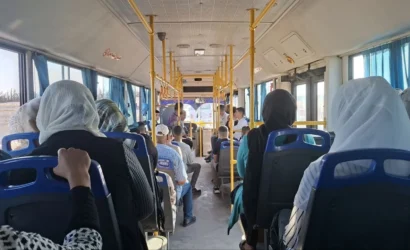
Since Day 3 includes a "public transportation experience," what form of public transport will we be using, and what are the specific safety considerations for it?

The "public transportation experience" typically involves using a local city bus or a service (shared taxi) for a short, controlled segment of the Damascus tour. This is done purely for cultural immersion and under the direct supervision of your private guide. Safety considerations are minimized by keeping the group small and ensuring a safe, non-crowded vehicle for the short journey.

How much time is allocated to the train station (Day 3) and the National Museum in Damascus, and is photography allowed inside the museum?

The National Museum typically has 1.5 to 2 hours allocated for a guided visit to its main opened sections. The Damascus train station visit is a brief stop for photography and appreciation of the historical building (30 minutes max). Photography is generally allowed in the Museum's non-sensitive areas but check with your guide for any specific temporary restrictions.

Itinerary

While this itinerary highlights our most-loved landmarks, it is simply a foundation. We pride ourselves on our flexibility, and we are happy to tailor every stop to match your personal interests and pace.

Day 01 - Morning :
Arrival in Damascus & Hotel Check-in

Pick-up from Airport/Border (Lebanese or Jordanian). Transfer to Damascus hotel.

Day 01 - Afternoon :
Old Damascus Sensory Walk & Welcome

Welcome drink and guide meet. Guided walk through the alleys of Old Damascus, focusing on the scent of Damascene jasmine and spice markets.

Day 01 - Night :
Cardamom Coffee & Overnight
Enjoy strong cardamom coffee at the oldest café in Damascus, "Al-Nawfara." Traditional dinner and overnight stay in Damascus.
Day 02 - Morning :
Drive South to Bosra

Early departure from Damascus. (Driving Time: 1.5 - 2 hours)

Day 02 - Afternoon :
Bosra Roman Theater & Ancient City

Full exploration of Bosra: The Nabataean and Roman cities, the magnificent Roman Theatre, the Nabataean Gate, and the Roman Baths. Enjoy a home-cooked lunch.

Day 02 - Night :
Izra Church, Sayyida Zeinab & Return

Visit the Izra Church and Sayyida Zeinab (if logistically possible and appropriate). Drive back to Damascus. (Driving Time: 1.5 - 2 hours). Overnight in Damascus.

Day 03 - Morning :
Modern & Grand Damascus

Visit the National Museum and the magnificent Damascus Train Station. Experience local public transportation.

Day 03 - Afternoon :
Old Damascus Landmarks

Enter the walls of Old Damascus. Tour the Azm Palace, the Umayyad Mosque, Straight Street, and the Church of Ananias.

Day 03 - Night :
Damascene Culture & Nightlife

Explore some of the famous old Damascene houses with historical significance. Dinner followed by experiencing the nightlife of Damascus. Overnight in Damascus.

Day 04 - Morning :
The Aramaic Trail: Saidnaya & Maaloula

Check out and drive north to the Christian villages. Visit Saidnaya (Monastery of the Virgin Mary, Church of St. Sophia). (Driving Time: 1 hour to Saidnaya)

Day 04 - Afternoon :
Maaloula & Drive to Homs

Travel to Maaloula (Holy Road, Monastery of Saints Sergius and Bacchus, Monastery of Saint Thecla). Begin drive toward Homs. (Driving Time: 1.5 - 2 hours to Homs)

Day 04 - Night :
Homs Landmarks & Drive to Aleppo

In Homs: Visit the Church of the Belt of the Virgin Mary and the Khalid Ibn al-Walid Mosque. Taste famous Homs sweets. Continue long drive to Aleppo. (Driving Time: 3 - 4 hours to Aleppo). Overnight in Aleppo.

Day 05 - Morning :
Aleppo Citadel & Old City

Full exploration of Old Aleppo, focusing on the famous Aleppo Citadel and its immediate surroundings.

Day 05 - Afternoon :
Aleppo's Markets & Crafts

Wander through the famous covered markets (souqs) and admire the traditional soap factories. Visit Khan al-Saboun and Khan al-Nahhas.

Day 05 - Night :
Aleppo Cuisine Experience

Enjoy a comprehensive dinner featuring the distinctive and famous Aleppo cuisine. Overnight in Aleppo.

Day 06 - Morning :
Hama's Waterwheels & Palace

Check out of Aleppo and drive to Hama. (Driving Time: 2 - 2.5 hours). Visit the iconic waterwheels (Norias) and the magnificent Azm Palace on the Orontes River.

Day 06 - Afternoon :
Krak des Chevaliers

Drive to the magnificent valley. (Driving Time: 1 - 1.5 hours). Extensive tour of Krak des Chevaliers, the world-famous Crusader castle.

Day 06 - Night :
Bedouin Camp & Drive to Palmyra

Dinner in the most beautiful valley in Syria, enjoying the view of Krak.

Day 07 - Morning :
Palmyra: Bride of the Desert

Drive directly toward Palmyra after an early Breakfast. Driving Time: 3 hours.Full morning exploration of the legendary Palmyra: Temple of Bel, Arch of Triumph, Column Avenue, Tetrapylon, and the Palmyra Citadel.

Day 07 - Afternoon :
Palmyra Ruins & Drive to Damascus

Visit the House of the Dead and underground tombs. Enjoy a final Bedouin lunch. Begin the long return drive to Damascus. (Driving Time: 3 - 4 hours to Damascus)

Day 07 - Night :
Departure

Transfer to the Damascus Airport or the Syrian (Lebanese or Jordanian) border for your onward journey.

You can send your enquiry via the form below.

The Ultimate Syrian Heritage Loop: Seven Days, Seven Millennia